Quarter-Hour Chimes Explained: Westminster, Roman, and Local Striking Patterns
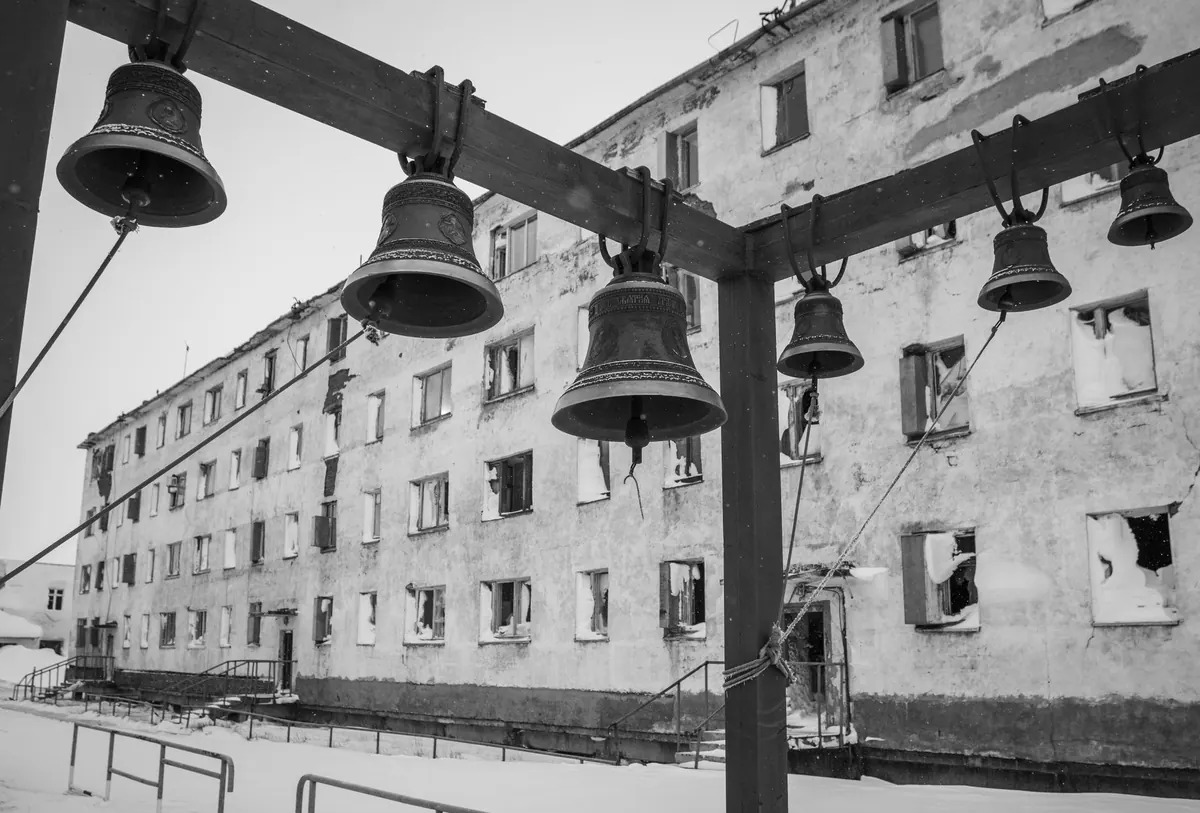
The four notes come down from the tower at a quarter past, and then the square is quiet again. Fifteen minutes later the same bells say something slightly different. Most people hear this all their lives without quite listening. But a quarter chime is one of the few pieces of machinery in a town that is also a small piece of music, and once you know what to listen for, an unfamiliar tower stops being background noise and becomes a puzzle you can solve in about an hour.
What a quarter chime is actually doing
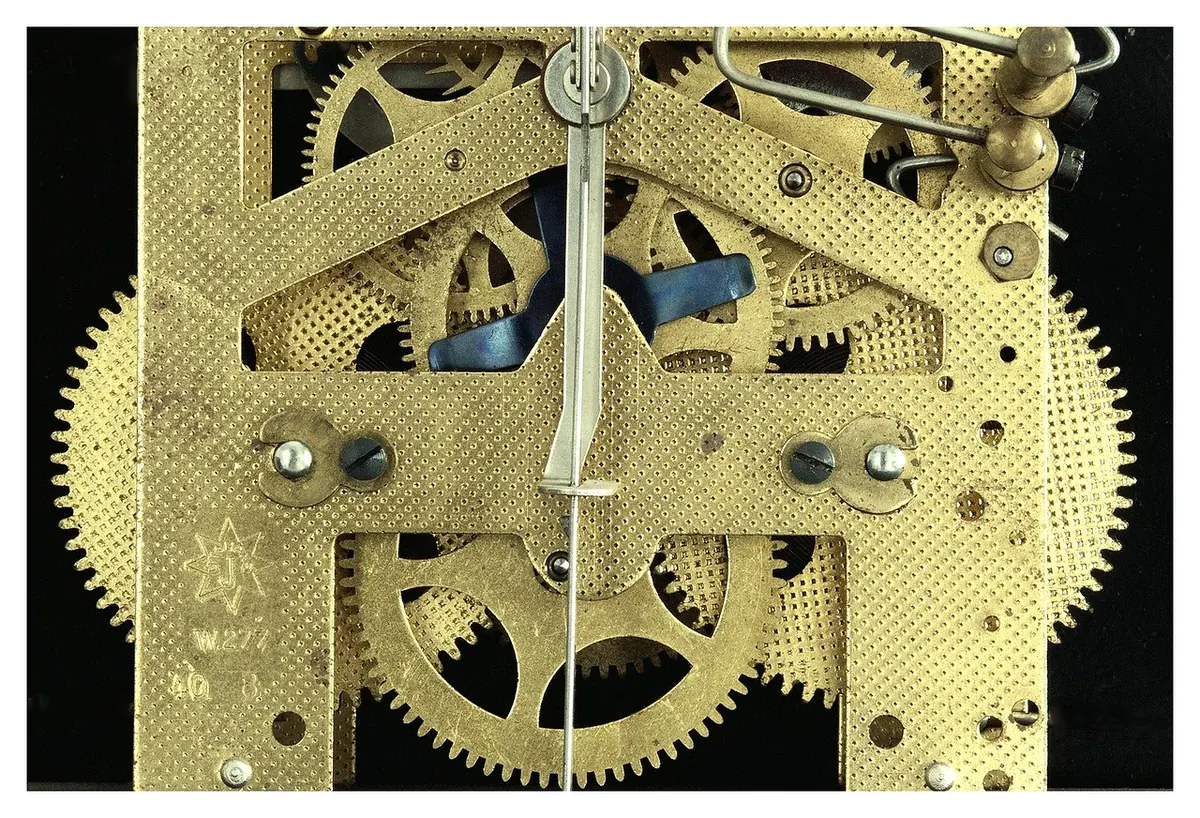
Inside the clock, the going train keeps time; a separate chime train does the announcing. At each quarter, a lever is released and a pinned barrel or a set of cams turns, lifting hammers in a fixed order and letting them fall onto the bells. The tune is not played, it is cut into metal: move a pin and you change the melody. That is why a chime can be altered, restored, or lost when a barrel is replaced.
The quarters and the hour are usually different jobs. The quarters belong to a small group of lighter bells; the hour is normally struck on the tenor, the heaviest bell in the frame, with a slower hammer and a much bigger sound. At the Great Clock in London, four quarter bells handle the melody and the great bell strikes the hours.
One clarification worth having ready, because visitors often mix them up: a clock chime is not change ringing. Change ringing is a team of people pulling ropes in mathematical permutations. A chime is a machine striking a short repeated phrase, and it is the thing you can identify from the pavement with no more equipment than a watch.
Westminster: four phrases that build
The melody most people in the English-speaking world know without knowing its name is the Westminster Quarters, also called the Cambridge Quarters, generally said to have been first used at Great St Mary's in Cambridge in the 1790s. It works on a simple principle: each quarter is a phrase, and each quarter adds to what came before.
Listen for the shape rather than the pitch. The first quarter usually steps downward three times and then drops to the deepest of the quarter bells. The second starts low, climbs to the top note and falls back. The third climbs again and settles on a middle bell. The fourth quarter is the giveaway: it is markedly longer, stringing the earlier phrases together and ending back on the deep bell, after which the hour is struck.
How to be sure it is Westminster
- Count the notes in each quarter. The first three quarters are short and equal in length; the fourth is much longer.
- Check whether the fourth quarter repeats material you have already heard that hour. If it does, you are almost certainly listening to Westminster.
- Wait for the hour. The melody should run directly into the hour strike on a heavier bell, with only a beat of silence between them.
- Compare with a neighbouring tower. Westminster is so widely copied that two churches in the same town may use it on different bells.
There are other English chimes in the same family, among them Whittington and St Michael's, both built on the same idea of a short phrase per quarter. They are less common and less instantly recognisable, and the method for learning them is the same: listen at each quarter in order, and note where the phrases repeat.
The Roman strike: why the hour comes in fives
“Roman” in tower horology usually refers to a striking system, not a melody. On a Roman strike, the hours are shared between two bells of different pitch: a high bell counts single hours and a low bell stands for five. Seven o'clock is struck as five, one, one. Twelve is five, five, one, one.
The point was economy. A conventional strike at twelve o'clock means twelve heavy hammer blows; the Roman arrangement means four. Less wear on the hammer, less load on the train, and a distinctive sound that carries. It appears on plenty of eighteenth- and nineteenth-century clocks in Britain and on the continent, and it catches listeners out because the blows arrive in groups of fives rather than in a straight count.
If a tower with a Roman strike also has quarters, those quarters are usually counted on a single bell rather than a melody — one blow at a quarter past, two at half past, three at a quarter to, four before the hour. When you hear that pattern, do not try to fit a tune to it. Add up the blows after the fives and you have the time.
And no, the word has nothing to do with the Roman numerals on the dial, though both appear on the same clocks.
Counted quarters, ting-tang, and local habits
Most of the world's towers do not play Westminster. They count, and they count in ways that vary from region to region and sometimes from parish to parish.
The simplest local pattern is the counted quarter on one bell: one, two, three, four. The next most common is the two-bell alternation often called ting-tang, where each quarter adds another pair of blows on two bells of different pitch — a pair at the first quarter, two pairs at the half, and so on. It is easy to mistake for a melody at a distance, because the alternation sounds tuneful, but the count is what matters.
Then there are genuinely local chimes: a four-note phrase written for one church, a town hall sequence borrowed from a hymn, a fragment of a folk tune. These are the ones worth writing down. They usually follow the Westminster logic — a short phrase per quarter, a longer passage at the hour — but the notes belong to that building alone. Many Italian and central European towers keep quarters on a small bell and hours on the big one, with a short introductory flourish before the hour on feast days or at fixed times of day.
Also expect variation in when a tower speaks at all. Plenty of clocks are fitted with a silencing lever so the chime is cut off overnight, and some are wound or electrically driven now while the bells and hammers remain original.
Reading an unfamiliar tower: a field checklist
- Note the exact time you hear the chime, using your phone. Everything else follows from that.
- Count the blows at each quarter, not just the notes. Write the numbers down in order.
- Note which quarter is longest. A long fourth quarter followed by an hour strike points to Westminster or a close relative.
- Listen for groups of five in the hour strike. That is Roman striking, and the remaining blows are the units.
- Check whether the quarters and the hour use the same bell. Separate bells suggest a classic chime-and-hour arrangement.
- Record thirty seconds of audio on your phone. A recording you can replay is worth ten minutes of straining on the pavement.
- Look at the dial and any plaque on the tower or in the porch
Photo: Павел Гавриков / Pexels